
Prep That Prevents Peel Failures
Concrete Grinding and Prep in Knoxville for surfaces that must bond to epoxy without delaminating under load
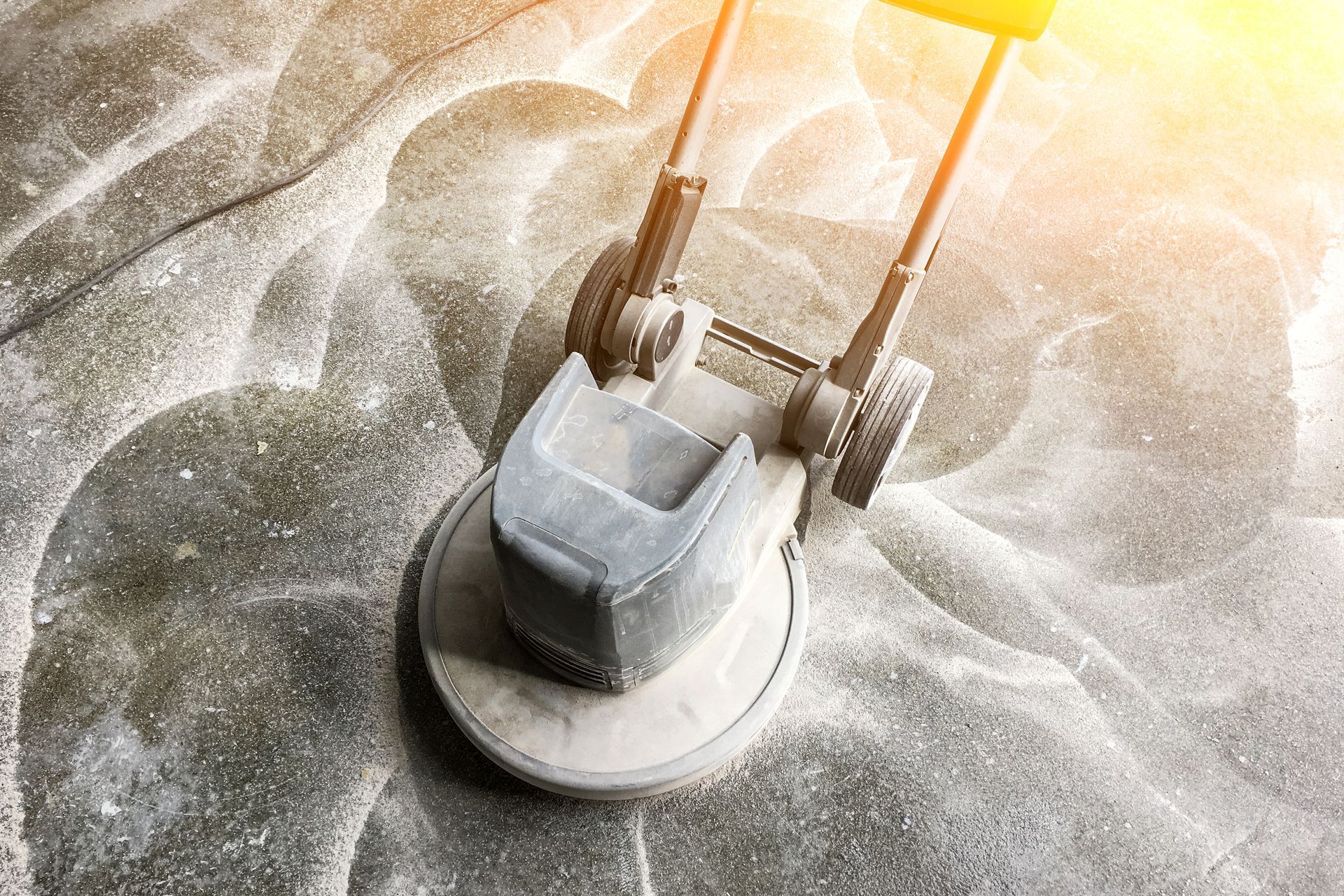
Epoxy coatings bond to concrete mechanically, not chemically, so the surface must be opened to the correct profile before any product is applied. Major League Epoxy TN uses a multi-head Indonesian diamond grinder with diamond blades to remove oil stains, old coatings, surface laitance, and DIY sealers that block adhesion on East Tennessee slabs. Grit selection ranges from 15 to 60 depending on concrete hardness, and a moisture meter reading is taken after every grind to confirm the slab is dry enough for coating. This preparation phase is not optional—it is the single factor that determines whether a floor holds for 15 years or peels within months.
Grinding creates a concrete surface profile, or CSP, that allows epoxy to lock into the substrate rather than sit on top of a sealed or contaminated layer. Without this profile, the coating relies on surface tension alone, which fails as soon as the floor experiences thermal expansion, moisture vapor, or applied load.
Request a free estimate to evaluate your slab and determine the prep requirements before coating.
The diamond grinder removes the top layer of concrete to expose aggregate and open pores that the epoxy penetrates during application. This process eliminates contaminants that acid etching cannot address, including cured sealers, tire marks, and embedded oils. After grinding, the surface is vacuumed to remove dust, then wiped with solvent to ensure no residue remains before the base coat is applied.
Once prep is complete, the concrete appears lighter in color and feels rough to the touch—both indicators that the surface is ready for coating. The epoxy will cure into this prepared profile and form a mechanical lock that resists peeling, even under vehicle traffic or thermal cycling. Properly prepped floors do not delaminate because the bond strength exceeds the tensile strength of the concrete itself.
Moisture testing after grinding identifies slabs with vapor transmission rates too high for standard coatings, in which case a moisture-mitigating primer is applied before the base coat. Grinding equipment is calibrated to avoid over-profiling, which can create a surface too rough for decorative finishes, or under-profiling, which leaves the coating vulnerable to shear failure.
What Property Owners Ask About Prep
Clients in Knoxville often want to know why grinding costs more than acid etching, how long prep takes, and whether old coatings can be left in place. These answers explain why mechanical prep is non-negotiable for long-term coating performance.
Why is mechanical grinding required instead of acid etching?
Acid etching creates inconsistent porosity and cannot remove old coatings or oils, while grinding mechanically opens the surface to a uniform profile that ensures consistent adhesion across the entire slab.
How long does the grinding and prep phase take?
Grinding time depends on slab size and contamination level, but most residential garages require 4 to 6 hours of grinding, vacuuming, and solvent wiping before coating begins.
What is a concrete surface profile and why does it matter?
CSP refers to the texture and depth of the surface after grinding—too smooth and the epoxy won't bond, too rough and the coating may not level properly or cover the peaks.
What happens if moisture levels are too high after grinding?
A moisture meter reading above acceptable thresholds means a vapor-blocking primer must be applied before the base coat, or the coating will bubble and delaminate as vapor escapes through the slab.
Why do some contractors skip the grinding step?
Grinding requires specialized equipment and adds time to the job, so less experienced contractors substitute acid etching or skip prep entirely, which leads to coating failure within the first year.
Major League Epoxy TN is licensed and insured, with a 15-year warranty that depends on proper surface preparation. Schedule a slab evaluation to determine grinding requirements and system compatibility for your project.