Floors Rated for Forklift Loads
Commercial Epoxy Flooring in Knoxville for warehouses, retail spaces, and light-industrial facilities that require continuous traffic durability
Knoxville warehouses and showrooms operate on floors that take forklift impacts, pallet drops, and constant foot traffic without scheduled downtime for repairs. Major League Epoxy TN installs commercial epoxy flooring systems built to match those load demands, starting with a full slab assessment that measures moisture vapor, porosity, and surface condition before any coating system is selected. The mil thickness on commercial floors runs approximately 50 square feet per gallon thicker than residential systems because the substrate needs additional protection against point loads and abrasion.
Commercial flooring failures typically stem from moisture vapor issues that weren't tested before installation or coating systems too thin to handle the applied load. Moisture vapor testing prevents delamination in concrete slabs exposed to groundwater or poor vapor barriers, and system thickness is matched to whether the floor will see foot traffic only or wheeled equipment.
Schedule a free estimate to review your facility's traffic patterns and substrate condition.
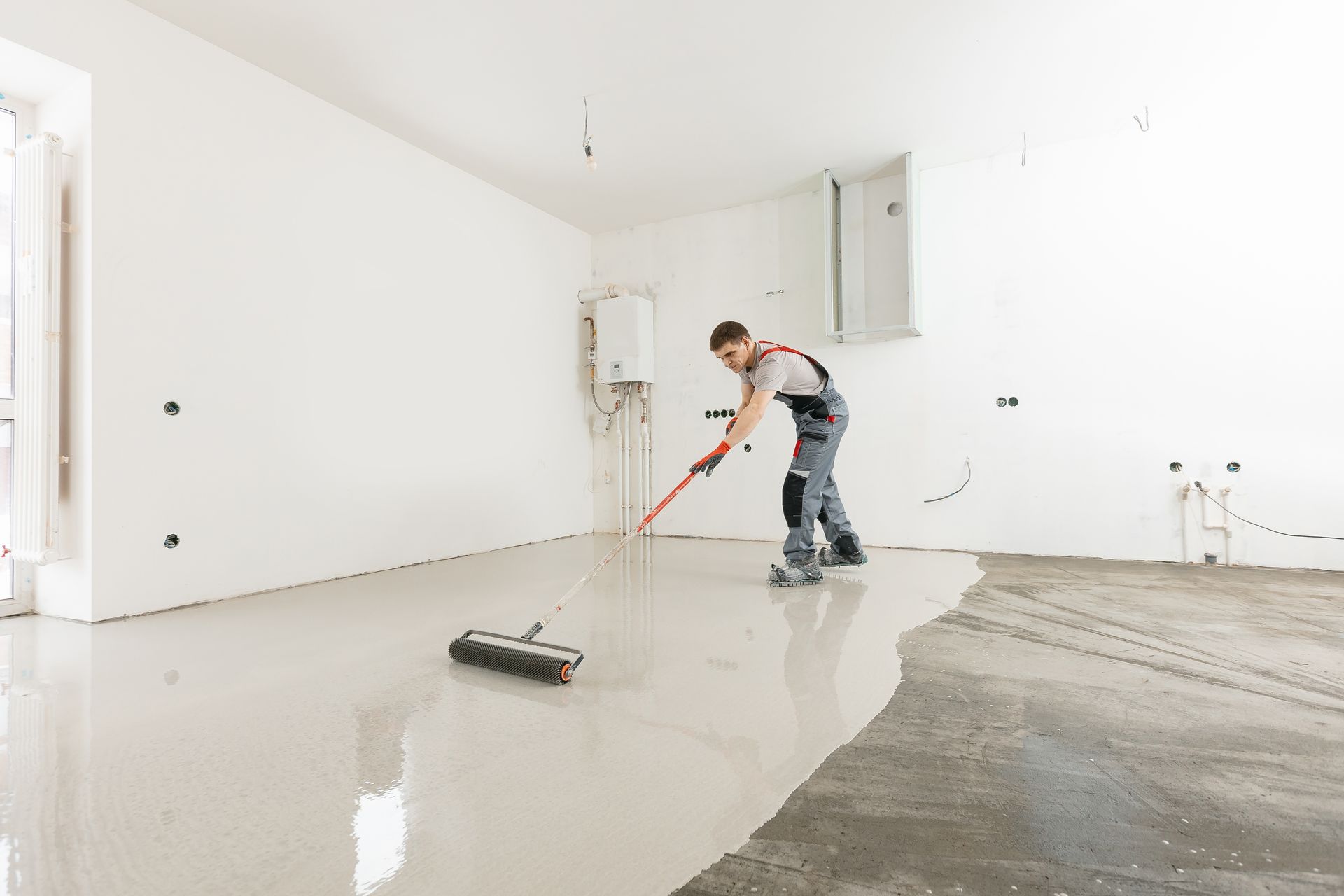
Before any product is applied, the crew evaluates the slab for existing coatings, contamination from oils or chemicals, crack patterns, and moisture levels using a calibrated meter. The surface is then mechanically ground to remove prior finishes and open the concrete to the profile required for the selected system. This step is not optional—commercial slabs under load cannot rely on surface-level bonding.
Once the system cures, the floor handles the same traffic that previously caused cracking, surface wear, or staining without visible damage. Cleaning shifts from scrubbing oil stains out of bare concrete to mopping a sealed surface that doesn't absorb spills. The coating holds up to tire marks, pallet dragging, and chemical exposure depending on the top coat specified for your operation.
Commercial systems can include chemical-resistant top coats for facilities handling solvents or acids, slip-resistant aggregate for high-moisture environments, and custom color zones for safety marking. The crew takes on jobs others turn down because the assessment phase identifies what each space actually requires rather than applying a one-size formula.
Questions Facility Managers Ask
Commercial clients in Knoxville want clarity on system longevity, downtime during installation, and how the coating holds up under specific equipment types. These answers address the most common concerns before scheduling work.
What is moisture vapor testing and why does it matter for commercial floors?
Moisture vapor testing measures the rate at which water vapor moves through the slab, and if levels exceed the coating's tolerance, a vapor barrier primer is applied to prevent bubbling and delamination.
How long does installation take for a typical warehouse floor?
Installation timing depends on square footage and existing surface condition, but most commercial projects require 3 to 5 days from grind to final cure.
How does mil thickness affect the floor's ability to handle forklift traffic?
Thicker systems distribute point loads across a larger surface area, preventing cracking and surface compression that thinner coatings cannot resist.
Why do some commercial epoxy floors fail within months while others last decades?
Failure is almost always tied to skipped prep steps—moisture not tested, surface not ground to profile, or system thickness inadequate for the load applied.
What happens if a section of the floor is damaged after installation?
Damaged areas can be ground out and recoated without removing the entire floor, as long as the surrounding coating remains bonded to the substrate.
Major League Epoxy TN is licensed and insured, with a 15-year warranty backing every commercial installation. Request a facility assessment to determine system requirements and installation scheduling for your operation.